
THE STILLNESS BETWEEN
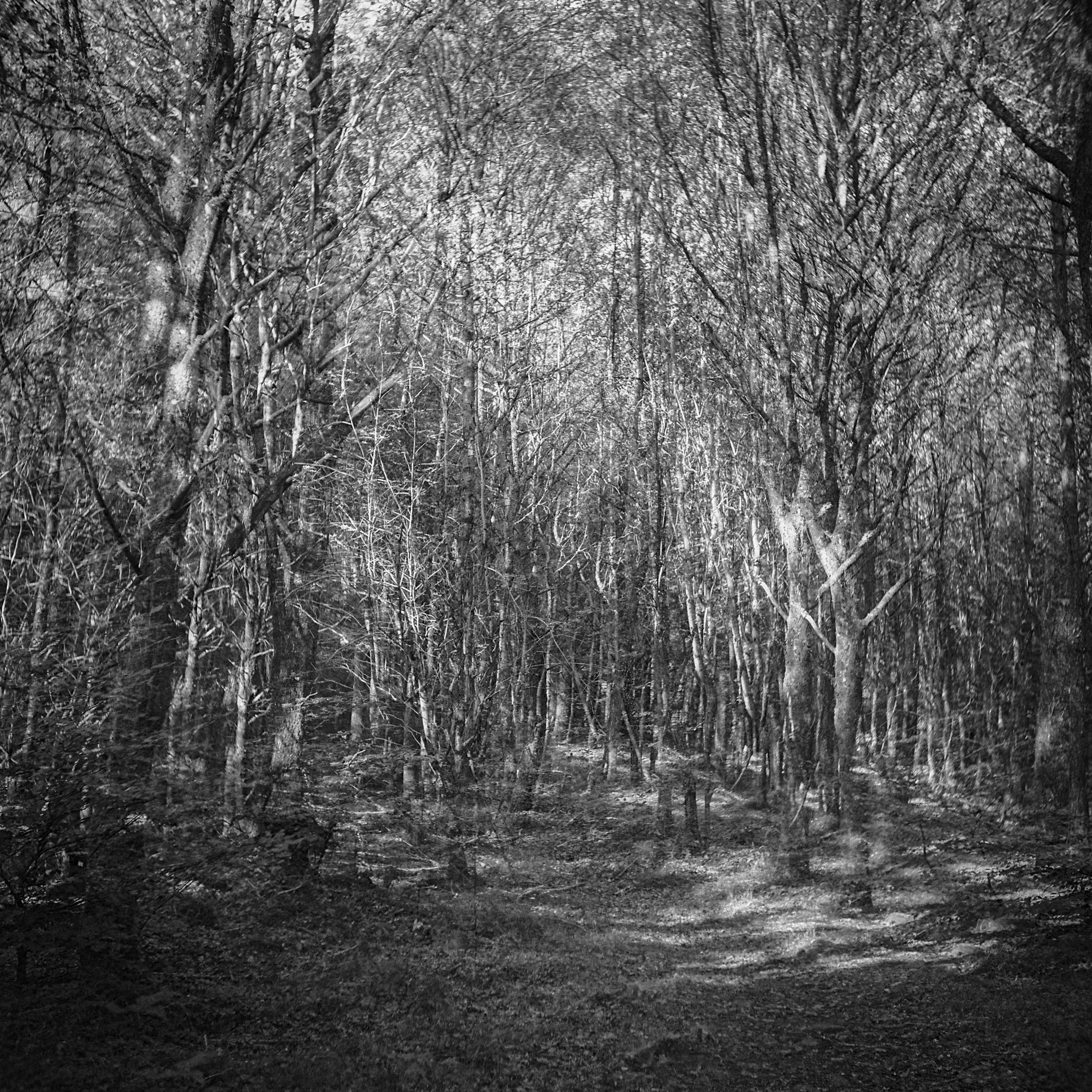
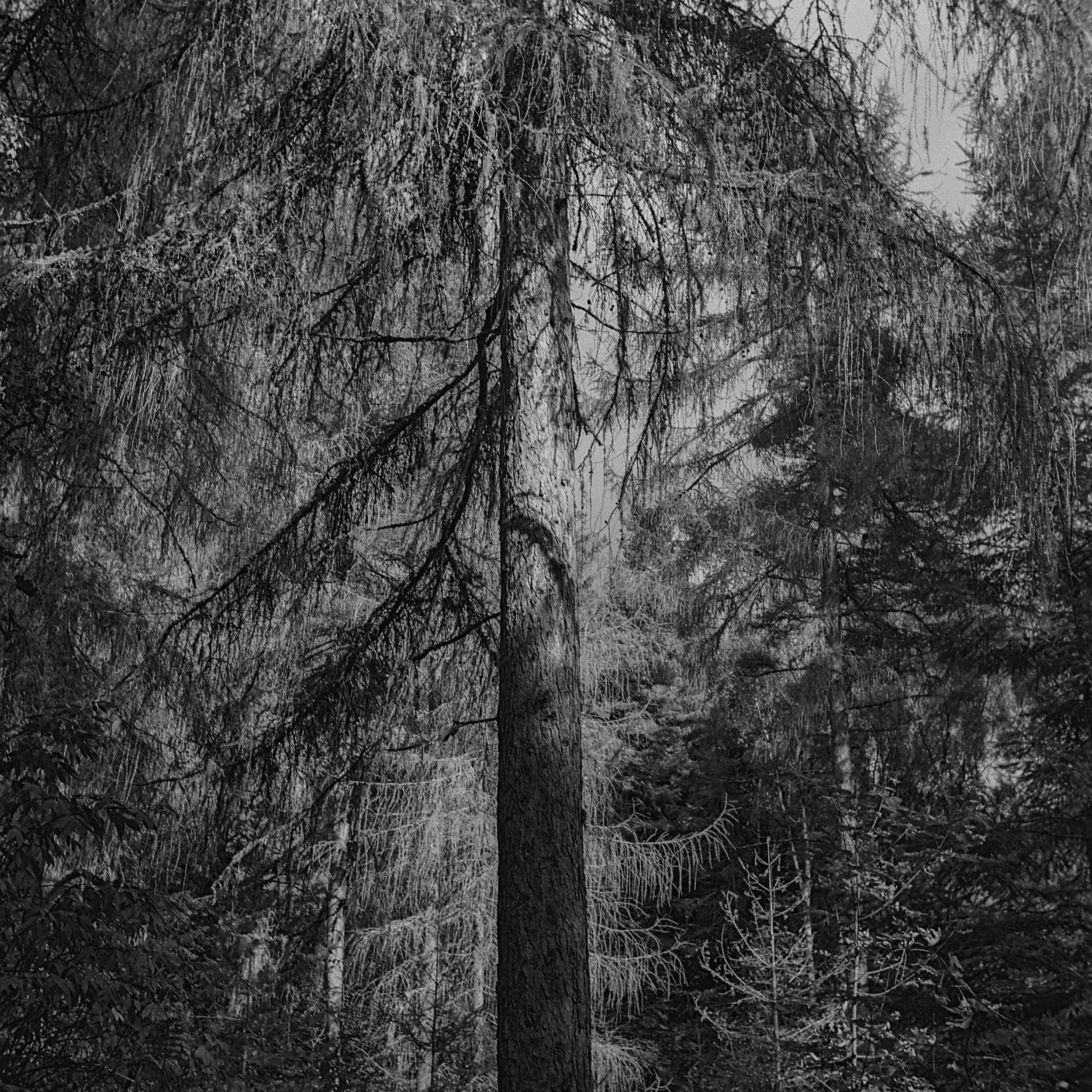
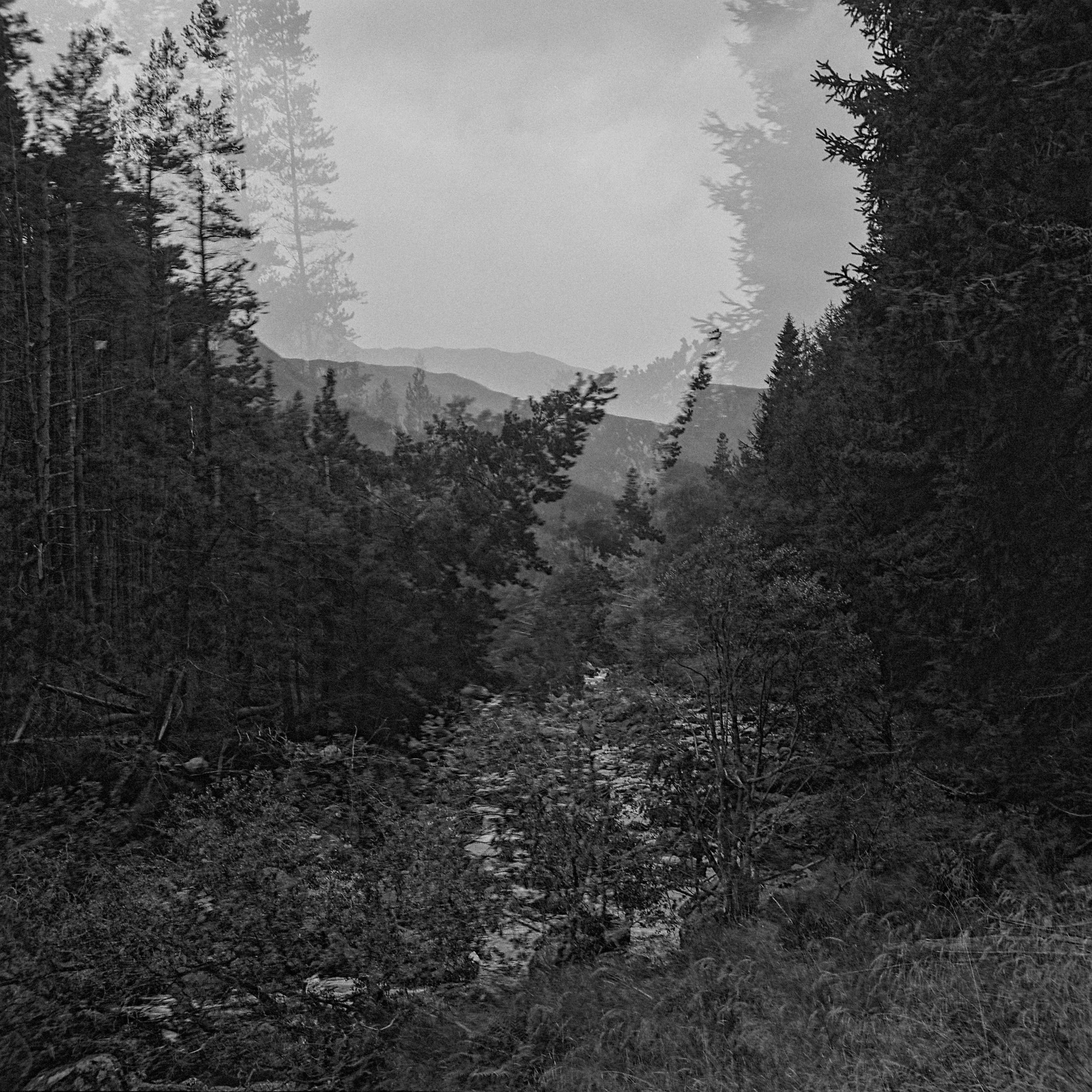
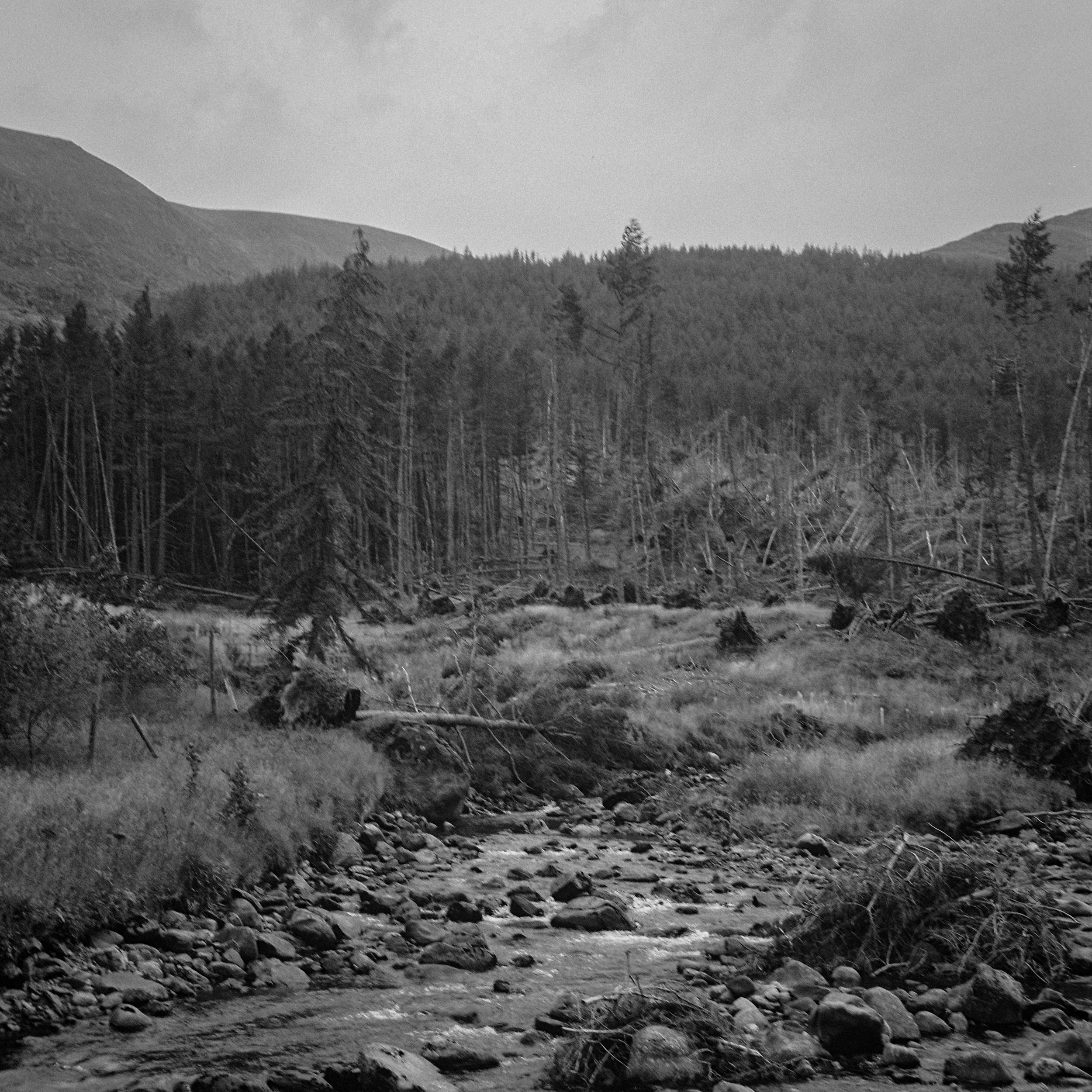
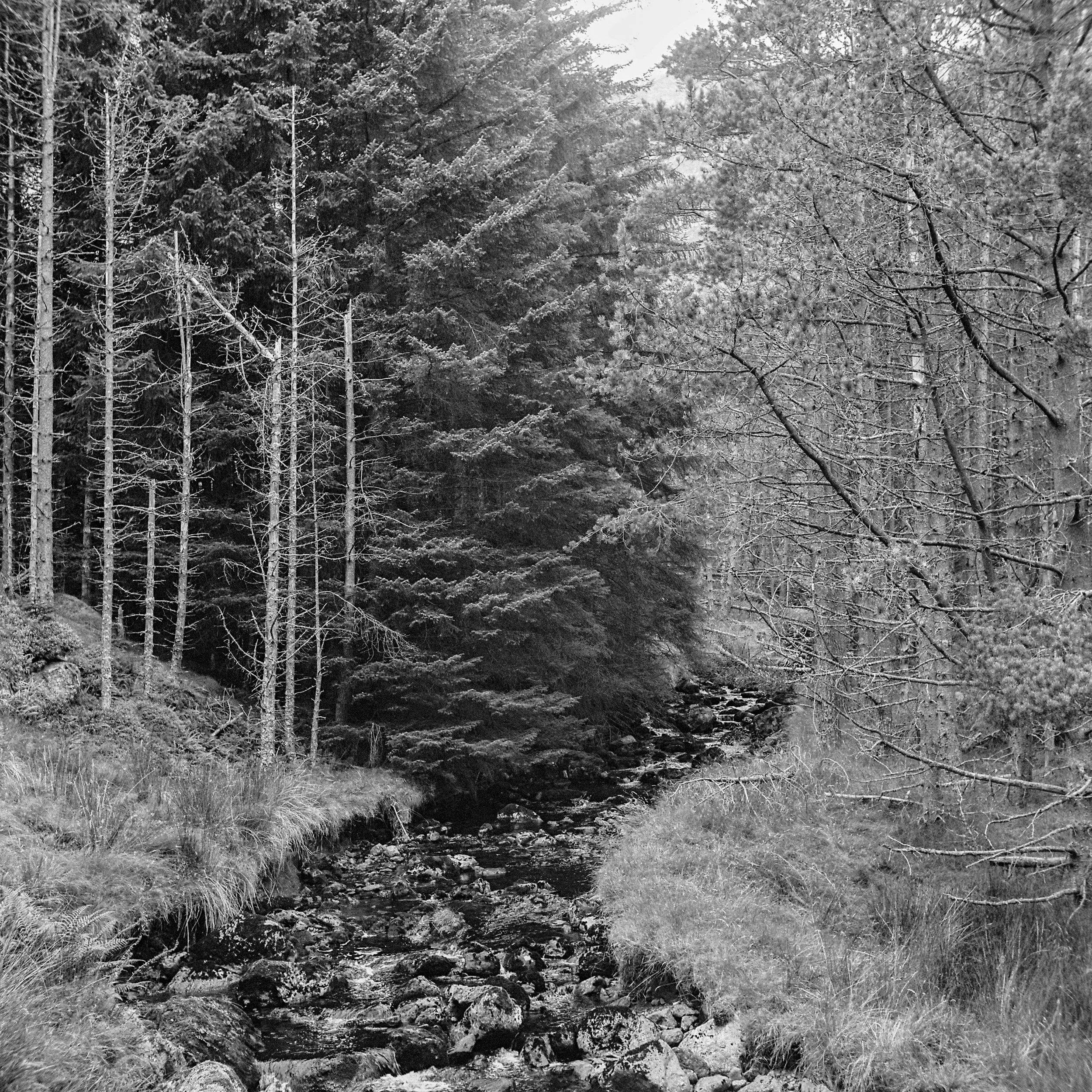
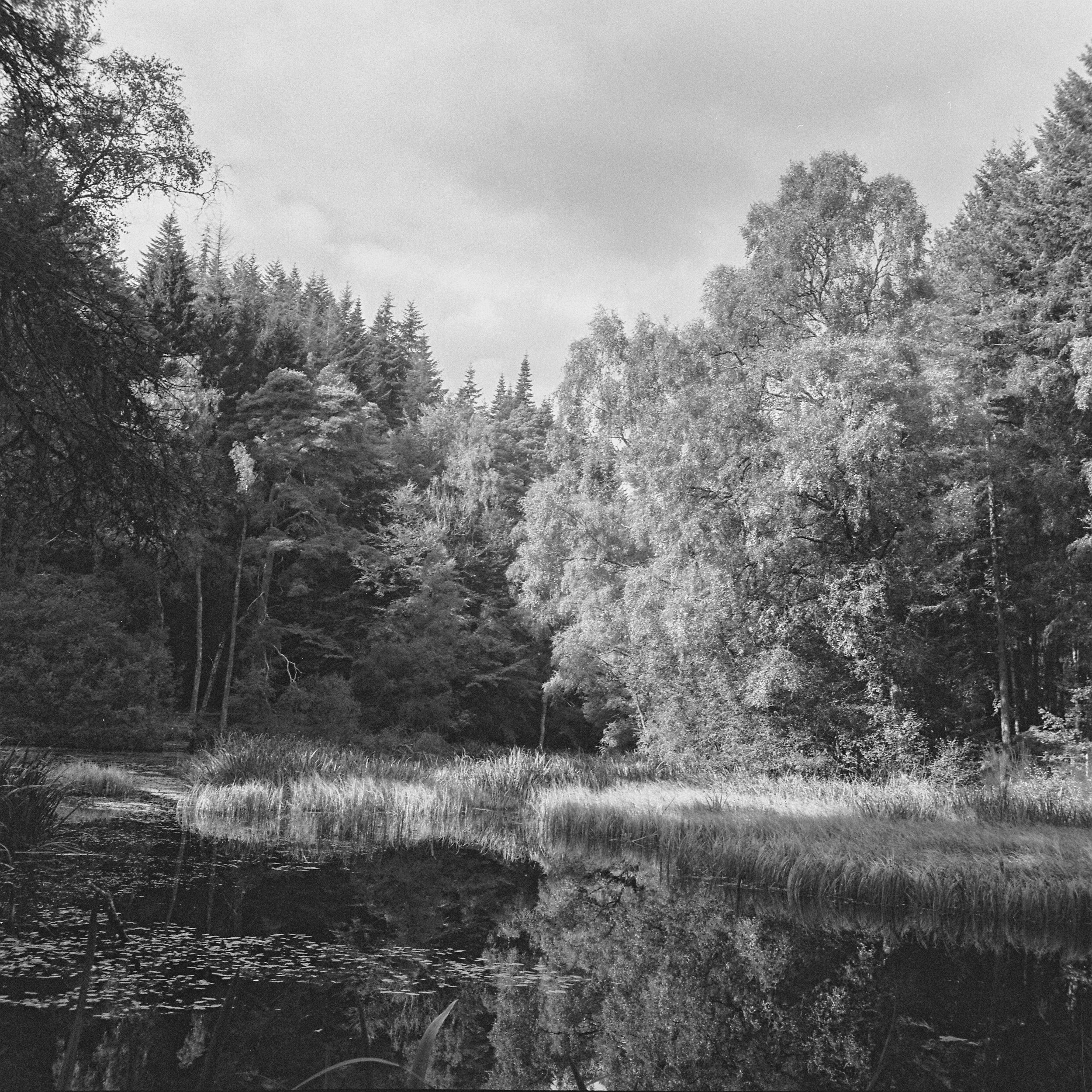
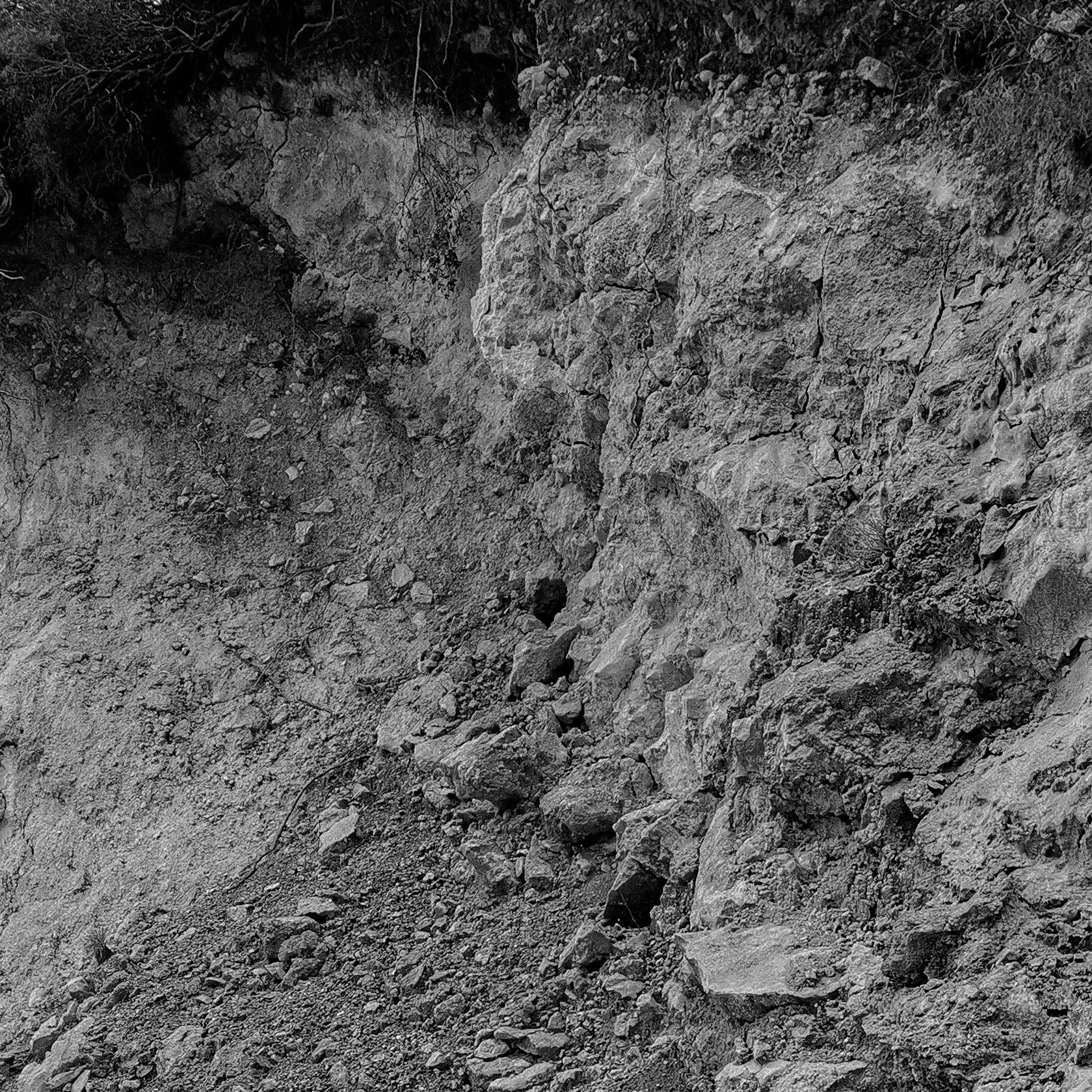
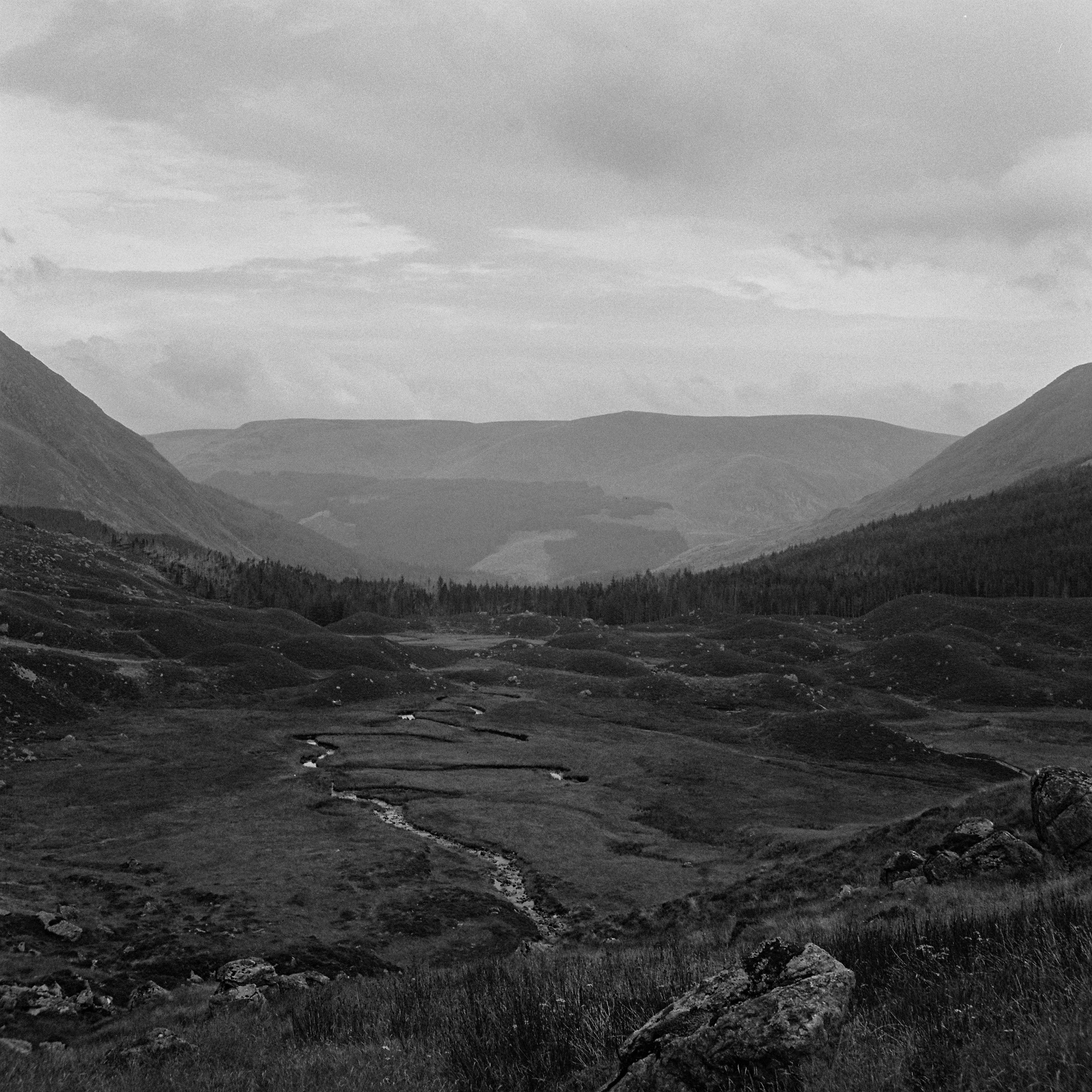
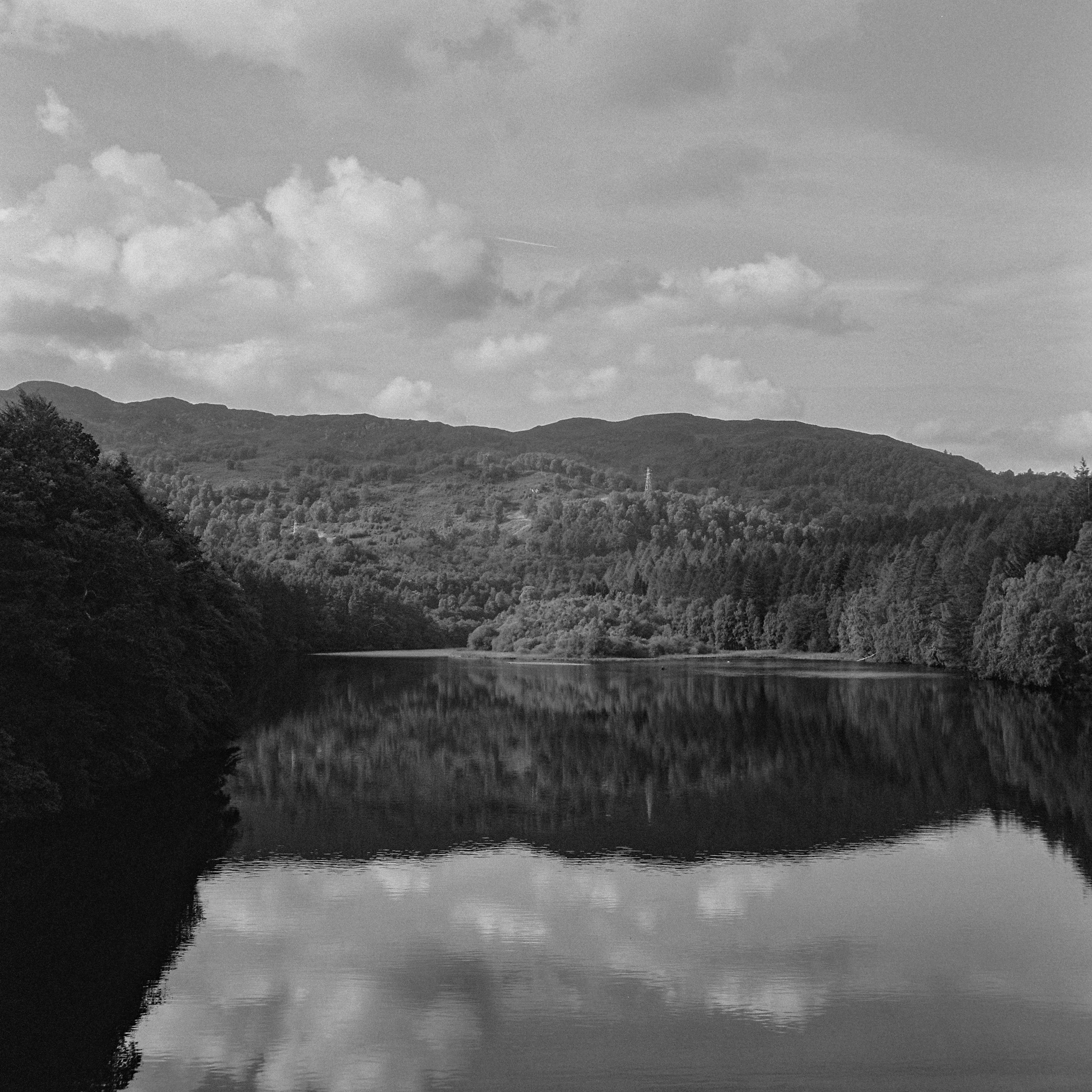
The Stillness Between is a black and white photographic project exploring the relationship between self, landscape and time. Made with a 1963 Yashica LM Mat on 120 film, the work developed through slow journeys across Scottish landscapes including Faskally Forest, Corrie Fee and Ben A’an. Rather than approaching these places as views to be recorded, the project considers what happens when photography becomes a way of remaining within a landscape long enough for the distinction between observer and environment to begin to soften.
The use of analogue photography is central to this approach. Working with a medium format camera slows the process of making an image, requiring attention before rather than after the shutter is released. Limited exposures, manual operation and the delay between photographing and seeing the developed film create a different relationship with time. The resulting photographs are less concerned with capturing decisive moments than with duration, presence and the experience of waiting.
Some images use double exposure to bring separate moments into the same frame. Landscape, light and vegetation overlap rather than remaining fixed within a single instant, allowing photography to suggest time as layered rather than linear. The process mirrors the way memory operates: experiences accumulate, recede and return rather than remaining as isolated, stable events.
The project is informed by the writing and lectures of Alan Watts, particularly his understanding of human experience as inseparable from the natural world. Rather than positioning the individual as an observer looking outward at nature, this perspective understands human life as occurring within the same interconnected processes of change, rhythm and impermanence. The Stillness Between uses photography to consider what this might mean experientially: whether slowing down can alter the perceived boundary between the person looking and the landscape being looked at.
Within contemporary landscape photography, the work moves away from ideas of landscape as spectacle, territory or picturesque view. Instead, landscape becomes relational: something experienced through movement, attention, memory and bodily presence. The photographs ask how a medium traditionally used to frame and separate a piece of the world might instead communicate a sense of connection with it.
Stillness within the project is therefore not understood as the absence of movement. Forests shift, water moves, weather changes and light continually reorganises what can be seen. Stillness describes a mode of attention within that movement: a temporary slowing through which subtle relationships become perceptible.
This raises a series of questions that remain open throughout the work. Can photography describe an experience of belonging within nature rather than observing it from a distance? What happens to our perception of landscape when we remain rather than pass through? And how might a photograph hold multiple moments, memories and sensations without resolving them into a single fixed account?
At its centre, The Stillness Between considers photography as an act of presence. The images do not attempt to define the landscapes they depict, but to register encounters in which time slows, perception becomes more receptive and the boundary between self and environment feels temporarily less certain.
-
Written alongside the photographic series of the same name, this story reflects on solitude, perception and the quiet dialogue between nature and self.
Words by Robby Ogilvie
He left before dawn. The path was narrow, trees leaning in, their branches holding the fog. His breath came out in clouds. Each step pressed softly into the wet ground, a dull, steady rhythm.
He walked until the light began to form, faint and grey. The mist stayed low, reducing the world to a few yards of path and moving shapes. A stream kept pace beside him, water slipping over stone. For a while, he watched it. It did not hold anything. Not even its own shape. He thought of how time slipped the same way, leaving no mark except sound.
When he reached the loch, he stopped.
The surface was still, holding the sky without disturbance. A bird touched down and moved across it, leaving only a brief trace. He sat on a flat rock and looked towards the hills. They were only half there, as if not fully decided.
He took out his camera, holding it in his hands. The light shifted slightly. He did not raise it.
The longer he sat, the more the quiet settled. Wet pine. Frost lifting from the grass. The faint, irregular rhythm of his own breath. Time passed, but without urgency. Nothing asked to be taken.
He thought of the years that had passed without noticing such things. Cities. Rooms. Streets crossed without looking. Places that had once felt full but which, in memory, had lost their weight.
By noon, the fog had lifted. The loch lay open under a pale sky. He followed the path as it curved back through the trees.
After a while, he turned. The loch was gone. Only a shimmer of light through the branches remained. He stood for a moment longer, then walked on.
The world had not changed, but he had learned, for now, to move at its pace.